King of Pop’s Legacy: Estate Tax Planning for Intangible Assets
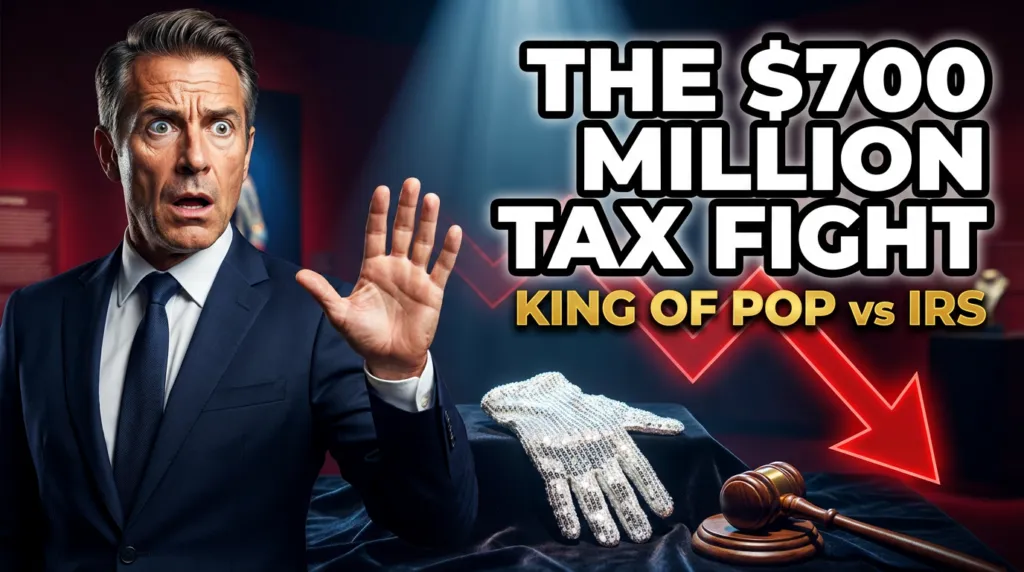
When Michael Jackson passed away in 2009, he left behind a legacy that was as complex as it was massive. But beyond the music and the moonwalk, he left behind one of the most famous (and litigated) tax cases in American history. The battle between the Jackson Estate and the IRS over the value of his “image and likeness” is the ultimate case study in estate tax planning for intangible assets. It’s a story of how “invisible” assets can create very real, very large tax bills. It could be a brand or a patent for a business owner. For a famous person, it’s their fame itself. At first, the IRS said Jackson’s picture and likeness were worth more than $434 million, but his estate said they were worth only $2,105. That “gap” is so big it would make your head spin. There’s more to estate tax planning for intangible assets than just “guessing” a number. You have to build a valuation that can be defended on the basis of market reality. In the new Michael Jackson movie, the value of his “intangible assets” is once again highlighted. This case set the bar for how to handle estate taxes for people who own substantial intellectual property. To help you understand how to plan your estate tax so that your “intangible” assets are protected after you die, I will show you how. Let’s take a look at the King of Pop’s home and see how much fame really costs. Section 1: Valuing “Image and Likeness” for Estate Tax Purposes The concept of “Image and Likeness” as a taxable asset is relatively new. It’s the idea that your “fame” has a dollar value that can be passed on to your heirs. But how do you value a person’s reputation at the exact moment of their death? This is the core challenge of estate tax planning for intangible assets. At the time of his death, Michael Jackson’s reputation was under a cloud, and his earning power was a fraction of what it once was. The estate argued that because of his personal controversies, his “image” was almost worthless in 2009. The IRS argued that his future earning potential remained substantial. This “date-of-death valuation” is the most important part of estate tax planning for intangible assets. You have to look at the world as it existed on that specific day, not what happened years later. I always tell my clients: “Your estate is valued at its ‘lowest’ point on the day you die, and its ‘highest’ point in the years that follow.” By being realistic about the “marketability” of your assets at the time of death, you can significantly lower your estate tax bill. This is the “valuation” side of estate tax planning for intangible assets. It’s about being as aggressive with your discounts as the IRS is with their premiums. I remember a client—let’s call her “Elena”—who was a world-renowned photographer. Elena had a massive archive of iconic images. She was a “creative genius,” but she had zero estate tax planning for intangible assets. When she came to me, she was worried that if she passed away, her children would have to sell her entire archive just to pay the estate taxes. The IRS would likely value her “copyrights” based on their “potential” value, not their “actual” current income. We brought in a specialized art appraiser and built a “defensible valuation” that included significant discounts for “lack of marketability” and “blockage” (the idea that if you sold all her photos at once, the price would crash). We also set up an ILIT to provide the cash for the taxes. Elena told me, “Daniel, I can finally sleep at night knowing my photos will stay in my family’s hands.” Elena realized that estate tax planning for intangible assets wasn’t just “boring legal stuff”; it was the “frame” that protected her life’s work. Section 2: The 2026 Biopic and Its Impact on Post-Mortem Asset Value We’re seeing a “resurgence” of Michael Jackson’s brand thanks to the upcoming biopic. This “post-mortem” growth is exactly what the IRS was betting on. But in estate tax planning for intangible assets, post-death events generally do not affect the date-of-death value. If you die when your business is worth $1 million, and it becomes worth $100 million five years later, the IRS only gets a cut of the $1 million. This is why “timing” and “appraisal” are so critical. You need a professional appraisal of your intangible assets today, while you’re still here. This establishes a “baseline” that is much harder for the IRS to challenge later. This is the “proactive” side of estate tax planning for intangible assets. You’re “locking in” your value before the “biopic” (or whatever your version of a biopic is) happens. I work with specialized appraisers to value trademarks, copyrights, and “goodwill” for my business-owner clients. We build a report that stands up to IRS scrutiny. By being proactive with your estate tax planning for intangible assets, you ensure that your heirs aren’t stuck fighting a decade-long battle over a “resurgence” they had nothing to do with. Section 3: Discounting for Lack of Marketability in Celebrity Estates One of the most powerful tools in estate tax planning for intangible assets is the “Discount for Lack of Marketability” (DLOM). This is the idea that an asset is worth less if it can’t be sold quickly. For a celebrity’s image and likeness, you can’t just “list it on eBay.” It takes years of work to “monetize” a legacy. This “delay” in cash flow justifies a significant discount in the valuation. In the Jackson case, the court eventually agreed with the estate on many of these discounts. They realized that “fame” is a volatile asset that requires massive investment to maintain. This is a vital lesson for any owner of “unique” assets. Whether it’s a specialized patent or a niche brand, you should always be looking for “discounts” in your estate tax planning for intangible assets. I always