

Uncategorized

An overwhelmed office worker sits cross-legged on the floor surrounded by towering stacks of paper and stressed colleagues, symbolizing anxiety and stress in the workplace.
Uncategorized

Mastering Anxiety and Stress in the Workplace: Conquer the Chaos in 2025

In today’s demanding and ever-evolving professional landscape, mental health at work is more important than ever. With tight deadlines, high expectations, and constant digital connectivity, employees often face overwhelming levels of anxiety and stress. This article, “Conquering the Chaos: Managing Anxiety and Stress in the Workplace,” dives into the heart of workplace mental health issues and presents practical solutions that truly work. We explore the root causes of mental health issues caused by the workplace—whether it’s burnout, poor communication, or a lack of short-term support for mental ill health in the workplace. Our guide offers clear strategies for how to cope with mental health in the workplace, including mindfulness practices, time-blocking methods, and communication techniques that encourage a supportive, stigma-free environment. You’ll also discover how to promote good mental health in the workplace by implementing workplace initiatives for mental health and introducing mental health support in the workplace that benefits everyone—from leadership to interns. Curious about what questions to ask about mental health in the workplace? We’ve got you covered. This blog also touches on mental health topics in the workplace that often go unspoken, as well as the benefits of mental health programs in the workplace that are proven to boost morale, engagement, and productivity. Whether you’re an HR professional, a team leader, or simply someone looking to improve your own well-being, this post provides the tools and insights you need to thrive. Learn how to encourage mental health in the workplace and discover why talk about mental health in the workplace isn’t just important—it’s essential. Let’s build a workplace culture where mental wellness is supported, encouraged, and normalized. Understanding Anxiety and Stress in the Workplace The Impact of Workplace Stress on Employees Work stress is more than just a bad day—it’s a growing crisis that affects mental health, workplace morale, and overall productivity. Anxiety and stress in the workplace have become critical issues for organizations across all industries, impacting everything from day-to-day performance to long-term employee retention. According to recent workplace anxiety statistics and mental health issues in the workplace statistics, nearly 1 in 5 employees report experiencing symptoms of anxiety or depression directly related to their job responsibilities. These findings align with broader concerns raised in numerous depression in the workplace articles, highlighting how signs of workplace depression—like withdrawal, fatigue, and lack of engagement—can often go unnoticed or unaddressed. The consequences of unmanaged workplace stress are far-reaching. Increased absenteeism, reduced job satisfaction, and high turnover rates are just the beginning. Left unchecked, anxiety and stress in the workplace can lead to long-term physical health problems, burnout, and a decline in team performance. So, what can organizations do? Start with mental health in the workplace initiatives. These may include wellness programs, mental health days, or open-door policies. Practical mental health in the workplace activities like mindfulness training or stress-reduction workshops have proven effective. Leading companies are also showcasing mental health in the workplace examples and sharing a mental health in the workplace case study or two to build a blueprint for others. HR professionals are taking notice. In fact, why is mental health in the workplace becoming a top priority for HR professionals is a question many are actively addressing through policies, training, and leadership development. They’re learning how to measure mental health in the workplace using surveys, analytics, and feedback tools to ensure that initiatives are data-driven and responsive. Whether you’re building a presentation on mental health in the workplace or just starting the conversation, the message is clear: reducing anxiety and stress in the workplace isn’t optional—it’s essential. If your organization isn’t actively working to reduce work anxiety, it risks losing its most valuable asset: its people. Let’s move beyond awareness and into action—because supporting mental health at work is not just good practice, it’s good business. Identifying the Root Causes of Workplace Stress Understanding the root causes of work stress is essential for promoting a healthier, more sustainable work environment. One of the most pressing issues facing modern employees is the rise of anxiety and stress in the workplace—a challenge that can severely impact productivity, morale, and mental health. Common triggers of anxiety and stress in the workplace include tight deadlines, overwhelming workloads, and unclear job expectations. These elements of work stress are not just productivity killers—they are often direct contributors to serious conditions like anxiety disorder. In fact, unmanaged work stress can lead to chronic tension and emotional exhaustion, both of which are closely linked to the signs of workplace depression. Physical and environmental factors also play a significant role in elevating anxiety and stress in the workplace. Constant noise, lack of privacy, uncomfortable workspaces, and poor lighting all contribute to mental fatigue. When left unaddressed, these stressors can escalate symptoms of anxiety disorder and create a workplace culture of disengagement and burnout. To effectively reduce work anxiety, organizations must take proactive steps—redefining job roles, supporting flexible work schedules, and creating spaces that promote calm and focus. These actions are critical to addressing anxiety and stress in the workplace before it leads to long-term mental health issues. By understanding and mitigating the underlying causes of work stress, employers can break the cycle of anxiety and stress in the workplace, foster resilience, and support long-term employee well-being. Practical Strategies for Managing Anxiety in the Workplace Implementing Mindfulness Techniques In today’s high-pressure work environment, mindfulness is gaining recognition as a powerful and accessible tool for managing anxiety and stress in the workplace. Amid rising work demands, employees are increasingly seeking ways to regain control over their mental space—and mindfulness offers exactly that. Practicing mindfulness means staying fully present and engaged in the moment. This seemingly simple act can have profound benefits in reducing symptoms of stress anxiety, calming the nervous system, and even lessening the severity of generalized anxiety disorder. Whether it’s a 5-minute breathing session, a short desk meditation, or a mindful walk during lunch, these techniques are effective ways to break the cycle of workplace anxiety and improve day-to-day functioning. By encouraging employees to keep a personal anxiety inventory—a reflective journal of triggers and emotional responses—organizations empower them
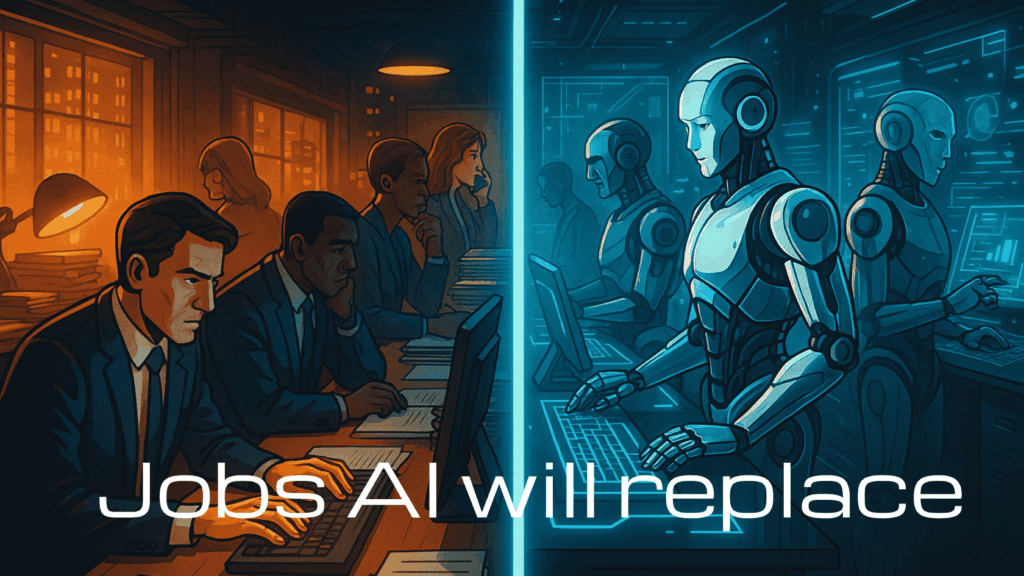

Split office with humans on one side and AI robots on the other, illustrating automation and the concept of jobs AI will replace
Uncategorized

Jobs AI Will Replace Can Lead to Better Careers – 2025 Update

Introduction The emergence of artificial intelligence (AI) is rapidly reshaping many aspects of daily life, and the world of work is no exception. As we stand on the brink of a new era in employment, it’s vital to explore precisely which jobs AI will replace or significantly transform. From factory floors to customer service desks, AI technologies are streamlining processes, leading to some jobs taken over by AI and other jobs that will be affected by AI. Understanding this shift is crucial for every individual, whether you’re a student contemplating future career paths, a professional seeking to upskill, a business owner strategizing for the future, or a job seeker trying to navigate the changing job landscape. This article delves into the top jobs AI will replace, examining a comprehensive list of jobs that will be replaced by AI and exploring what jobs AI will never replace. We will consider what jobs AI is replacing currently and what jobs AI will replace in 10 years. The goal is to provide insights into how to adapt to remain relevant and competitive as AI is changing the workforce and AI technology develops. We’ll also address the potential for AI to reshape industries and the sheer number of jobs that could be impacted. As AI tools like chatbots and generative AI accelerate adoption, it’s crucial to see which jobs AI will likely replace and how the workforce can adapt to work alongside AI. Top Jobs at Risk of Replacement Cashiers: The Shift to Self-Service One of the most evident shifts in the retail sector is the rise of self-service checkouts. Major retailers have already begun implementing AI-driven systems that allow customers to scan and pay for their items without the need for a human cashier. This trend is not merely a convenience but a significant cost-saving measure for businesses. According to industry reports, self-service kiosks can reduce labor costs significantly, leading to a decline in demand for traditional cashier roles. This clearly illustrates how jobs AI will replace roles requiring routine tasks. As consumers become increasingly accustomed to automated solutions, the role of cashiers is likely to diminish further, making it one of the jobs most likely to be taken over by AI. This transition is indicative of a broader trend towards automation in retail, where customer interactions are being optimized for efficiency and cost-effectiveness. For those in cashier roles, adapting to this change may involve seeking opportunities in customer service or other sectors where human interaction remains vital, as AI cannot replace certain human skills. Data Entry Clerks: Automation of Routine Tasks Data entry tasks, once a staple of administrative roles, are increasingly being automated through AI technologies. Machine learning algorithms now possess the capability to process vast amounts of information with remarkable speed and accuracy, significantly reducing the need for human data entry clerks. As companies strive for efficiency, the demand for individuals who perform routine data entry is expected to decline. This makes data entry one of the prominent jobs AI will replace due to its repetitive nature. However, this shift does not necessarily spell doom for all administrative roles. Instead, it highlights the importance of evolving skill sets. Professionals in this field may find opportunities in data analysis or information management, where human oversight and complex problem-solving skills remain crucial. Understanding AI and its applications can provide a competitive edge in a rapidly changing job market, helping individuals understand how AI can help them in evolving roles, rather than simply identifying the jobs AI will replace. Telemarketers: AI-Powered Sales Calls The telemarketing industry is witnessing a transformative shift as AI voices and AI chatbots take over traditional sales roles. With advancements in natural language processing, AI can now conduct sales calls, engage potential customers, and even handle objections. These developments have made it possible for companies to automate large portions of their outreach efforts, reducing the reliance on human telemarketers. This is a clear example of jobs AI will replace through automated communication. While some may argue that the human touch is irreplaceable in sales, the efficiency and cost-effectiveness of AI-driven solutions are proving hard to ignore. As a result, professionals in telemarketing may need to diversify their skill sets and transition into roles that require emotional intelligence and relationship-building skills, which AI cannot replicate. This shift is happening now, demonstrating that AI is already impacting various sectors. Customer Service Representatives: Chatbots and Virtual Assistants Customer service is another field undergoing significant transformation due to AI integration. Chatbots and virtual assistants are increasingly handling customer inquiries, complaints, and support requests, often providing immediate responses at any time of day. This shift enhances customer satisfaction while simultaneously reducing the need for a large workforce dedicated to customer service. This illustrates how jobs AI will replace routine customer interactions. Despite the rise of AI in customer support, there remains a critical need for human representatives in complex situations that require empathy, nuanced communication, and problem-solving skills. Therefore, professionals in this area should focus on developing these interpersonal skills to remain valuable in an era of automation, understanding that while AI can help with many tasks, it doesn’t mean all jobs AI will replace entirely. Industries Facing the Most Disruption Retail: The Rise of Automated Checkouts The retail industry is perhaps the most visibly affected by the rise of AI. From automated checkouts to AI-enabled inventory management systems, technology is reshaping the shopping experience. Companies are leveraging AI to streamline operations, reduce costs, and enhance customer engagement, leading to a reduced requirement for human staff. As retailers continue to adopt these technologies, job roles in traditional retail settings may diminish, making it one of the sectors where jobs AI will replace human positions at a significant rate. Workers must adapt by acquiring new skills or shifting into roles that emphasize personalization and customer experience, which remain integral to the retail business model. This exemplifies how AI is changing the retail landscape. Manufacturing: Robots on the Assembly Line Manufacturing has long been a sector dominated by automation, but the advent of advanced AI has taken this

Young person debating their future while reflecting on the accounting career outlook in 2025, shown through a mirror image of themselves as a CPA.
Uncategorized

Accounting Career Outlook: An Exciting Future Awaits in 2025

In 2025, the accounting career outlook is at the center of a national conversation as students, educators, and professionals reflect on the evolving demands of the workforce. The accounting profession crisis has been driven by several compounding factors, including a growing accounting talent shortage, a decline in accounting graduates, and concerns about the future of public accounting and audit careers. Reports indicate that fewer people are studying accounting, with many questioning whether an accounting degree still offers a strong return on investment. The integration of automation in accounting and the emergence of AI technologies have also fueled debate, leading some to ask, “Is accounting a dying profession?” or even, “Is accounting going extinct?” However, despite these uncertainties, the demand for skilled talent in financial reporting, management accounting, and specialized areas like enrolling in accounting programs remains steady—especially for those with adaptive, tech-forward skill sets. We’ll examine the accounting education pipeline, the role of career goals in shaping long-term success, and how the finance and accounting hiring market is adjusting to both talent shortages and automation. Whether you’re a student weighing your options for a career in accounting or a mid-career professional exploring your next step, understanding the accounting career outlook is essential. The employment outlook for accountants shows a promising trajectory, with the demand for accountants in the future expected to rise due to an increasing need to replace workers exiting the labor force.  The accountant job outlook reflects a broader trend in the accounting field, where accounting jobs future projections indicate numerous openings for accountants and auditors. As technology evolves, the future of the accounting profession will also require adaptability and new skills, making it critical for both new graduates and seasoned professionals to stay informed about the accounting job outlook 2025. This understanding will help you make informed, strategic decisions in today’s competitive labor market. Current Trends in the Accounting Field The accounting career outlook in 2025 continues to spark serious discussion across the industry. A growing accounting profession crisis is emerging, marked by the decline in CPA candidates, a steep accounting major dropping trend, and clear evidence that fewer people are studying accounting. These issues contribute directly to the challenging hiring environment, making it increasingly difficult to look for candidates with the necessary qualifications. Despite this, the accounting career outlook remains robust, with high demand for skilled finance and accounting professionals. This is especially true in areas such as financial reporting, decision-making, and the integration of emerging technologies. According to the BLS and various national labor studies, the employment of accountants and auditors may experience growth faster than the average for all occupations. Employers are continuously seeking top-tier accounting professionals to fill critical roles in the finance and accounting sectors, reflecting a positive job market and promising future accounting careers. As businesses evolve, the accounting field outlook indicates that those with a bachelor’s degree in accounting and relevant work experience will have the best opportunities to thrive. However, attracting and retaining top finance and accounting talent requires more than competitive pay. In a post-pandemic world, candidates now prioritize work-life balance, flexible roles, and opportunities for growth in accounting and finance sectors. To enhance the accountant career outlook, today’s firms must streamline their hiring processes and offer a more compelling value proposition that aligns with the future of accounting careers. Candidates are increasingly interested in positions that provide not only a competitive salary for accountants but also the chance to specialize, such as in forensic accounting or tax accounting.  As the CPA career outlook for 2025 indicates, many accountants seek environments where they can work from home while developing their accounting experience. Firms that recognize these trends will be better positioned to attract candidates with at least a bachelor’s degree, especially as states require CPA candidates to complete 150 semester hours of college coursework to be licensed. Maintaining a strong accountant outlook is essential for firms aiming to improve job prospects and ensure a stable financial future. The shift in the accounting career outlook raises important questions about the long-term sustainability of the profession. While some still view accounting as a stable career, others fear that it is no longer aligned with modern expectations. As automation continues to reshape workflows, successful accounting professionals must bring a mix of certified public accountant credentials, fluency with accounting software, and adaptive thinking to the table. Whether you’re an educator analyzing the pipeline of new talent, a firm adjusting to a shrinking applicant pool, or a student evaluating your future, understanding today’s accounting career outlook is critical. We’ll continue to explore how firms can respond to the demand for skilled talent, and how future professionals can thrive in this evolving space. Reasons for the Decline One of the most pressing challenges affecting the accounting career outlook in 2025 is widespread accounting burnout, particularly among students and entry-level professionals. The accounting student decline continues to be fueled by perceptions that accounting lacks creativity and flexibility—often viewed as a profession driven purely by rules and financial data, with limited room for innovation. According to the Bureau of Labor Statistics, while the demand for accountants and auditors remains stable, many students are turning away from the profession, leading to fewer people studying accounting and a tightening talent pipeline. At the same time, the rise of AI replacing accounting roles and broader trends in automation have introduced new pressures—and possibilities. Some worry that automation will eliminate traditional positions, particularly in routine reporting, while others recognize a growing need for professionals who can interpret data, contribute to decision-making, and manage emerging technologies. For those willing to adapt, these changes present new avenues within fully remote roles, certified management accountant paths, and advanced credentialing such as becoming a certified public accountant. Despite the challenging hiring environment, businesses in the U.S. continue to seek candidates who are tech-savvy and strategic thinkers. The accountant future outlook remains strong as many public accounting firms are actively recruiting to fill vacant or newly created accounting positions that require a broader mix of competencies. According to recent demand for skilled talent reports, the future

Students gathered around a colorful accounting-themed board game in a classroom, actively participating. Engaging accounting students..
Uncategorized

Engaging Accounting Students: 7 Powerful Wins

Introduction: The Challenge of Engaging Accounting Students Accounting education often faces the daunting challenge of engaging accounting students in a subject that many perceive as dull or overly technical. Traditional methods of teaching, such as lectures and rote memorization, can lead to disengagement and a lack of enthusiasm for the subject. Yet, the importance of accounting cannot be overstated; it is the backbone of business operations and financial management. This article explores various innovative methods and tools that educators can utilize to make accounting more engaging and effective for students, ultimately enhancing their learning experience and preparing them for successful careers. The goal is always to foster an environment that is truly engaging accounting students. Educational Benefits of an Engaging Curriculum Understanding the Value of Practical Knowledge Incorporating real-world applications into the accounting curriculum can significantly enhance the learning experience for engaging accounting students. Practical knowledge allows students to see the relevance of what they are learning, fostering a deeper understanding of core concepts. By integrating case studies, real-life scenarios, and interactive projects, educators can help students grasp the complexities and nuances of accounting practices. This approach not only solidifies theoretical knowledge but also builds essential skills such as analytical thinking and decision-making. To truly engage accounting students, practical application is key. Moreover, when students engage with practical knowledge, they are more likely to retain what they learn. The brain is wired to remember experiences that are meaningful and relevant. By applying accounting principles to real-life situations, students are more likely to develop a lasting understanding of the subject matter, which can lead to improved performance in exams and future job scenarios. This is vital for engaging accounting students effectively. Enhancing Critical Thinking and Problem Solving Accounting is not just about numbers; it is also about interpreting data and making informed decisions based on that data. An engaging curriculum encourages critical thinking and problem-solving skills. By presenting students with complex problems that require more than simple calculations, educators can challenge them to think critically and explore various solutions. This not only prepares students for the challenges they will face in their careers but also cultivates a mindset that values inquiry and innovation, crucial for engaging accounting students. Interactive discussions, group projects, and the use of technology in the classroom can further enhance these skills. For instance, using accounting software to simulate real-world financial scenarios requires students to analyze data, draw conclusions, and make recommendations. Such experiences build confidence and competence, essential traits for any aspiring accountant. For more insights into foundational concepts, consider exploring resources on What is Accounting. Interactive Accounting Games: Learning Through Play Types of Games that Make Accounting Fun One of the most effective ways to engage accounting students is through interactive games that make learning accounting principles enjoyable. Various educational games have been developed to teach key accounting concepts, such as accounting cycles, financial statements, and budgeting. For example, board games like Cash Flow simulate real-life financial situations, allowing students to practice their decision-making skills in a risk-free environment. The integration of gamification has been shown to significantly increase student engagement in accounting courses. Additionally, online platforms and mobile applications have emerged that offer gamified experiences for students. These games often incorporate elements like points, levels, and rewards, which not only motivate students but also provide them with immediate feedback on their performance. This playful approach to learning helps to demystify accounting and makes it more accessible to those who may find the subject intimidating. This method is highly effective for engaging accounting students. Case Studies: Real-World Applications of Game Learning Case studies serve as a bridge between theory and practice, and when combined with interactive games, they can enhance the learning experience significantly. Educators can create scenarios where students must use their accounting knowledge to solve real-world problems, such as managing a budget for a startup or analyzing the financial health of a company. This hands-on approach not only keeps students engaged but also reinforces the practical application of accounting principles. This is another powerful strategy for engaging accounting students. For instance, a case study game could revolve around a fictional company facing financial difficulties. Students would need to collaborate, analyze financial data, and propose solutions to improve the company’s performance. This encourages teamwork and communication skills, essential for any successful career in accounting. For those looking to deepen their understanding of financial management, resources on Small Business Guide can be particularly helpful. Accounting Simulations: A Virtual Experience Creating Realistic Scenarios for Students With the advancement of technology, accounting simulations have become an increasingly popular tool in education. Simulations provide a virtual environment where students can practice accounting tasks in a controlled setting, allowing them to experience the consequences of their decisions without the real-world stakes. These scenarios can range from preparing tax returns to managing a company’s financial records over a fiscal year. Platforms like GoVenture Accounting simulations offer excellent opportunities for engaging accounting students in practical scenarios. One notable example is software that allows students to simulate the role of a financial analyst. They can analyze market trends, prepare financial forecasts, and make decisions based on data, all within a safe learning environment. Such experiences are invaluable, giving students a taste of professional life and the challenges they may encounter. This approach is highly effective for engaging accounting students. Benefits of Hands-On Learning in Virtual Environments The hands-on learning aspect of simulations means that students are actively participating in their education rather than passively absorbing information. This active engagement enhances retention and understanding of complex accounting concepts. Furthermore, simulations can cater to different learning styles, allowing visual learners to engage with graphical data and auditory learners to benefit from verbal instructions and discussions. This is crucial for engaging accounting students across diverse learning preferences. Simulations also encourage resilience and adaptability. When students encounter challenges in the virtual world, they learn to assess their options, make informed decisions, and adapt their strategies. This experience is crucial for their future careers, where they will

Illustration highlighting best energy rates for dog grooming businesses with eco-friendly lighting, a groomer, a fluffy white dog, and sustainable salon decor.
Uncategorized

Best Energy Rates for Dog Groomers: Save Now

Why Getting the Best Energy Rates for Dog Grooming Businesses Matters to Pet Groomers Getting the best energy rates for dog grooming businesses is increasingly vital for profitability, impacting not only operational costs but also environmental sustainability and customer loyalty. As the grooming industry continues to grow, business owners must recognize that implementing energy-efficient practices can result in significant savings and contribute positively to the planet. Impact on Operating Costs For pet grooming businesses, managing operating costs is crucial to maintaining profitability. Energy expenses often represent a substantial portion of overhead. By adopting energy-efficient practices and equipment, groomers can significantly reduce their energy bills. For instance, opting for high-efficiency dryers and LED lighting can reduce electricity use, resulting in savings that accumulate over time. These reductions in utility costs can free up funds for investing in other areas of the business. Furthermore, many utility companies offer incentives for businesses that choose energy-efficient upgrades. These programs often include rebates for purchasing Energy Star-rated appliances, making the initial investment more affordable. Groomers who take advantage of such programs not only save money on equipment but also benefit from lower ongoing energy costs. Environmental Responsibility In addition to financial benefits, energy efficiency aligns with broader environmental responsibilities. The grooming industry, like many others, contributes to carbon emissions and resource depletion. By implementing energy-saving measures, groomers can significantly reduce their carbon footprint. This shift towards sustainability is increasingly significant to consumers who prefer to support environmentally conscious businesses. Customers are more likely to choose a grooming service that demonstrates a commitment to environmental stewardship. By marketing energy-efficient practices, grooming businesses can attract clients who value sustainability, thereby enhancing their brand image and fostering customer loyalty. Customer Perception and Loyalty A growing segment of consumers is now actively seeking out businesses that prioritize sustainable practices. By showcasing energy-efficient operations, pet groomers can differentiate themselves in a competitive market. This differentiation can lead to increased customer loyalty as clients feel good about supporting a business that cares for the environment. Moreover, businesses that communicate their energy-efficient initiatives through marketing channels can enhance their reputation. Customers appreciate transparency and are more likely to return to a grooming service that openly shares its commitment to sustainability. Actively engaging in conversations about energy efficiency can turn satisfied clients into vocal advocates for the business. How to Compare the Best Energy Rates for Dog Grooming Businesses Understanding and comparing the best energy rates for dog grooming businesses is essential. Different providers offer various rate plans, and knowing how to navigate these options can lead to substantial savings. Understanding Rate Structures Before selecting an energy provider, groomers should familiarize themselves with the different rate structures available. Common rates include fixed, variable, and time-of-use plans. Fixed rates remain constant over time, providing stability in budgeting and financial planning. Variable rates, on the other hand, can fluctuate, potentially increasing costs during periods of peak usage. Time-of-use rates charge different prices based on the time of day, incentivizing users to consume energy during off-peak hours when rates are lower. By analyzing their energy usage patterns, grooming businesses can select a rate structure that aligns best with their operational hours and energy consumption habits, ensuring they do not pay more than necessary. Utilizing Energy Comparison Tools Energy comparison tools are valuable resources for business owners looking to evaluate their options effectively. Many websites and platforms allow users to input their location and energy usage to receive customized quotes from various providers. This process enables groomers to compare rates, services, and customer satisfaction ratings. Additionally, some energy comparison platforms offer insights into the green credentials of different providers, helping groomers choose companies that prioritize renewable energy sources. This can further enhance a business’s sustainability profile while lowering costs. Negotiating with Energy Providers Once groomers have gathered information on rates and providers, they can leverage this knowledge to negotiate better terms. Many energy companies are willing to offer discounts or incentives to retain business customers. Engaging directly with providers can result in favorable agreements that lead to long-term savings. Moreover, business owners should not hesitate to inquire about any loyalty programs or referrals that can further reduce costs. Building a good relationship with an energy provider can also lead to personalized service and support in managing energy consumption effectively. Top Energy-Efficient Grooming Equipment to Upgrade In 2025 Investing in energy-efficient grooming equipment is an excellent way to enhance operational efficiency while reducing energy costs. As technology advances, grooming tools become more efficient, reliable, and environmentally friendly. High-Efficiency Dryers High-efficiency dryers are essential tools in any grooming salon. Traditional dryers consume a significant amount of energy, contributing to high electricity bills. Newer models feature advanced heating technology and consumption monitoring, resulting in faster drying times with less energy usage. These dryers not only minimize energy costs but also enhance the grooming experience for pets by reducing stress during the drying process. Researching and investing in models designed specifically for grooming businesses can lead to considerable long-term savings. High-efficiency dryers may come at a higher upfront cost, but their energy savings often pay off within a short period. LED Lighting Solutions Lighting is another area where grooming businesses can make impactful energy-efficient upgrades. Switching from traditional incandescent or fluorescent bulbs to LED lighting can result in substantial energy savings. LEDs use significantly less power, have a longer lifespan, and emit less heat, reducing the need for additional cooling in warmer months. Moreover, improved lighting can enhance the grooming environment, making it more appealing to both pets and their owners. Pet grooming salons with well-lit, inviting spaces are likely to attract more clientele, further leveraging the benefits of energy-efficient upgrades. Energy-Star Certified Tools When purchasing grooming equipment, business owners should prioritize Energy Star-certified tools. These products meet stringent energy efficiency guidelines set by the Environmental Protection Agency (EPA). Energy Star tools not only consume less energy but often deliver superior performance compared to standard models. Whether it’s clippers, trimmers, or other grooming appliances, selecting Energy Star-certified options helps ensure that the business operates efficiently. As

Illustration of suuceesful private practice with flowers emerging from a human head silhouette, symbolizing growth.
Uncategorized

Establishing a Successful Private Practice in Mental Health Counseling

Starting a successful private practice in mental health counseling is a rewarding endeavor that provides autonomy and control over your professional life. As a mental health professional, establishing your practice involves several critical steps, each requiring careful planning and execution. This article provides a comprehensive, step-by-step guide to help you successfully navigate the process of starting your private counseling practice. What Are the Benefits of Private Practice? Independence and Autonomy One of the primary benefits of starting a private practice is the independence it offers. As a private practitioner, you can set your schedule, choose your clients, and implement the therapeutic approaches you believe in. You can establish a professional setting that reflects your values and career aspirations. Financial Rewards While starting a private practice involves initial investments, the potential for financial rewards is significant. As a practice owner, you can set your rates and determine how many clients you want to see. This control over your income can lead to higher earnings than working for an employer. Additionally, accepting private pay clients can provide a steady revenue stream. Professional Growth Running your practice provides numerous opportunities for personal and professional growth. You will develop skills in business management, marketing, and practice management. Essential skills are required to establish a thriving private practice and attain lasting career fulfillment. Flexibility Private practice offers flexibility that is often unavailable in other professional settings. You can set your hours, allowing for a better work-life balance. This flexibility is particularly beneficial for those who need to accommodate personal or family commitments. Direct Client Impact You can build solid and therapeutic relationships with your clients in private practice. This direct impact on your client’s mental health and well-being can be incredibly fulfilling and reinforces the importance of your work. What Are some drawbacks of commencing a solo practice? Financial Risk Starting a solo practice involves significant financial risk. The initial costs, including rent for office space, malpractice insurance, practice management software, and other startup expenses, can be substantial. Additionally, there may be periods of inconsistent income, particularly in the early stages of your practice. Administrative Burden As a practice owner, you will have to handle all administrative duties, including appointment scheduling, invoicing, upkeep of client records, and processing insurance claims. These tasks can be time-consuming and take away from the time you could spend with clients. Investing in practice management software can help streamline these processes but still requires time and effort. Isolation Working in a solo practice can be isolating. Unlike working in a group practice or organization, you may not interact daily with colleagues. This isolation can lead to loneliness and reduced professional support and collaboration opportunities. Joining professional associations like the American Counseling Association and participating in peer supervision groups can help mitigate this isolation. Marketing and Client Acquisition Building a successful private practice involves significant marketing efforts to attract prospective clients. Many mental health professionals find this aspect challenging, as it requires branding, online marketing, and networking skills. Developing a solid marketing strategy and understanding how to market your practice effectively is crucial to ensuring a steady flow of clients. A Counselor’s Education Degree Requirements To establish a private practice therapist career, obtaining the necessary educational credentials is essential. Most states require a master’s degree in mental health counseling. This advanced degree is essential for pursuing licensure and practicing as a professional counselor in these fields. This higher education provides individuals with the foundational knowledge and clinical expertise to address various mental health challenges and conditions effectively. Clinical Experience Besides formal education, it is crucial to acquire clinical experience. Before obtaining licensure, most states mandate a specific number of supervised clinical hours. This practical experience is vital for honing essential skills and preparing for independent practice. Additionally, it assists in establishing a network of professional connections who may direct clients to your practice. Obtaining a License Licensure Requirements Becoming a licensed mental health professional involves a crucial process of obtaining licensure. The specific criteria differ from one state to another but typically encompass the following: Completing an accredited degree program. Acquiring supervised clinical experience. Passing a state-recognized exam. Credentialing Credentialing verifies your qualifications and grants you the authority to practice as a mental health counselor. This process often involves submitting transcripts, proof of clinical experience, and other documentation to the licensing board. Once credentialed, you will be issued a National Provider Identifier (NPI), necessary for insurance billing and other administrative tasks. Continuing Education Maintaining licensure typically requires ongoing continuing education. Keep up to date with the most recent advancements in the mental health sector while maintaining ethical standards and delivering top-quality care to your clients. Many states have specific continuing education requirements, so staying informed and compliant is essential. Evaluate Funding Options Self-Funding One option for financing your new practice is self-funding. This involves using personal savings or obtaining a loan to cover startup costs. While this option provides complete control over your finances, it also involves significant personal financial risk. Business Loans Many new practice owners take out business loans to cover initial expenses. Small businesses in the health services sector can access various loan options from banks and financial institutions. When applying for a loan, having a well-structured business plan is essential. This plan demonstrates your ability to manage the business and repay the loan. Grants and Scholarships Grants and scholarships are available specifically for mental health professionals looking to start a private practice. These funds can help offset startup costs and reduce financial strain. Research available grants and scholarships to find those that match your needs and qualifications. Crowdfunding Crowdfunding has become an increasingly popular way to raise funds for new ventures. Platforms like Kickstarter and GoFundMe allow you to present your business plan to a broad audience and seek financial support. This approach can also raise awareness about your practice and attract prospective clients. Insurance Billing 101 for Therapists Understanding Insurance Billing Insurance billing is a complex but essential part of running a successful private practice.

Scroll to Top