The Salon Owner’s Guide to Salon Tip Reporting Compliance
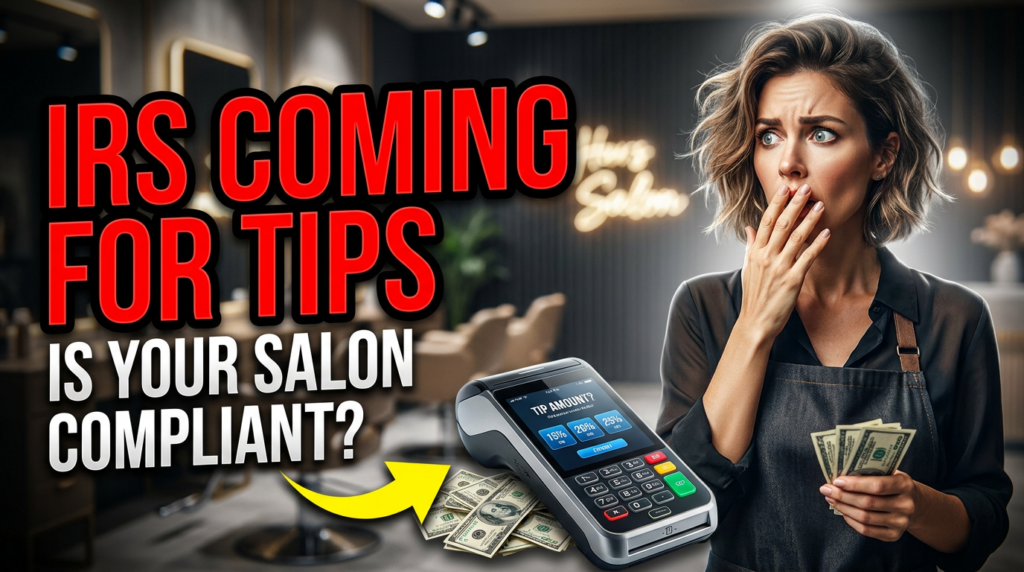
Running a salon is an art, but running the books? It’s more of a puzzle with pieces that are always shifting. You’re managing chair rentals, employee commissions, retail sales, and the ever-elusive world of tips. For most salon owners, keeping track of salon tip reporting is what keeps them up at night. It’s not just about keeping your stylists happy; it’s about keeping the IRS from knocking on your door. I’ve seen amazing salons—places with a waitlist six months long—get crippled by payroll audits. Usually, it’s not because they were trying to cheat the system. It’s because they didn’t have a solid grasp on salon tip reporting compliance. Tips are technically income for the stylist, but they’re also a reporting responsibility for the owner. If you aren’t tracking them correctly, you’re on the hook for unpaid payroll taxes, and that’s a hole that’s very hard to dig yourself out of. Come 2026, when digital payments will make up nearly 100% of salon transactions, the “old school” tip-tracking method on a notepad won’t cut it. You need a clear and accurate system that is, most importantly, compliant. Let’s talk about how to do salon tip reporting compliance right and save your salon’s financial future. Section 1: Understanding the FICA Tip Tax Credit So, first of all, the good news. Most salon owners don’t realize that the government actually gives you a break for doing the right thing with salon tip reporting compliance. That’s the FICA Tip Tax Credit (section 45B). Basically, because you are paying payroll taxes on the tips your employees earn, the IRS allows you to take a credit for a portion of those taxes on your year-end return. This is not just a deduction; this is a dollar-for-dollar credit. If you are a salon owner with 10 stylists who are reporting their tips correctly, this credit could save you thousands of dollars every year. But that’s the problem. You can only claim it if you have the records to show that you’re complying with salon tip reporting. I always tell my clients that the FICA Tip Tax Credit is the “carrot” the IRS uses to encourage proper reporting. If you do the work to stay compliant, you get paid for it. It’s one of the few areas where the tax code actually works in favor of the small business owner. So, if you haven’t been claiming this credit, it’s time to get your salon tip reporting compliance in order and start keeping more of your money. There was a salon owner, we’ll call her Sarah, who had a thriving business in a hip part of town. Sarah was a visionary in the hair arena but “laid back” about her salon tipping compliance. Thinking she was doing them a favor, she let her stylists keep all their cash tips without reporting them. Two years later, one of those stylists left on bad terms and filed for unemployment. When the state looked at the stylist’s reported income, it didn’t match the lifestyle she was living. That triggered a full payroll audit of Sarah’s salon. Sarah ended up owing over $40,000 in back taxes, penalties, and interest. She almost lost her salon over something that could have been fixed with a simple reporting policy. That’s the high cost of ignoring salon tip reporting compliance. Section 2: Best Practices for Tracking Cash and Digital Tips In a world where everyone pays with a phone or a card, digital tips are easy to follow. Your POS system does the work for you. But cash still rules in many salons, and that’s where salon tip reporting compliance gets tricky. Stylists usually think cash tips are “off the books,” but the IRS doesn’t see it that way. The best practice is to have a clear policy that all tips, whether cash or digital, are to be reported at the end of each shift. Most modern salon software includes a simple “tip out” feature that lets stylists enter their cash ticket and clock out. This creates a digital trail to protect both the stylist and the salon owner. I would suggest a “spot check” once a month. Compare the cash tips reported to the service revenue for that stylist. If someone is regularly reporting zero cash tips while doing twenty haircuts a week, that’s a red flag for your salon tip reporting compliance. You are not required to be a detective, but you are required to be a responsible owner. Payroll audits are best met with transparency. Section 3: Avoiding Common Payroll Pitfalls for Booth Renters vs. Employees This is the “big one” in the salon industry. Are your stylists employees (W-2) or booth renters (1099)? The answer completely changes your salon tip reporting compliance responsibilities. If they’re employees, you’re responsible for withholding taxes and reporting their tips. If they’re booth renters, they’re essentially their own business, and your responsibility is much lower. The mistake I see most often is “misclassification.” If you’re telling a booth renter when to show up, what products to use, and how much to charge, the IRS is going to say they’re an employee. And if they’re an employee, all that missing salon tip reporting compliance from the last three years is suddenly your problem. Be very clear about your business model. If you want the control of an employee-based salon, you have to embrace the payroll responsibilities that come with it. If you want a booth-rental model, you have to let go of the control. Mixing the two is a recipe for a salon tip reporting compliance nightmare that can end in massive fines and back taxes. Section 4: Automating Your Salon’s Tax Filings In 2026, there’s no reason to be doing your payroll and tax filings by hand. There are so many great tools—Gusto, Square Payroll, Zenefits—that are designed specifically for small businesses. These systems can integrate directly with your payroll software, making salon tip reporting compliance almost automatic. When a stylist reports a tip in your POS,