
Small Business Guide

Explore expert insights and practical tips in our Small Business Guide. Empower your business with essential strategies for growth, finance, and success.
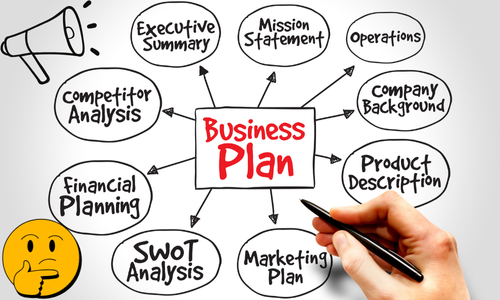
Creating a Business Plan with components including Executive Summary, Mission Statement, Operations, Company Background, Product Description, Marketing Plan, SWOT Analysis, Financial Planning, and Competitor Analysis.
Small Business Guide

Creating a Business Plan: 10 Master Steps

Creating a business plan is critical for any entrepreneur looking to start or grow a business. A well-crafted business plan serves as a roadmap for your business, outlining your goals, strategies, and the steps needed to achieve success. This guide will show you how to create an example using a simple business plan template. In this example, we will cover the critical sections of a business plan, including the executive summary, company description, market analysis, organization and management, product line or services, marketing and sales, and financial projections. Each section plays a role in presenting a comprehensive overview of your business and its potential for success. Following this business plan example, you can communicate your business idea, market opportunity, and financial projections to potential investors and stakeholders. Creating a business plan can help you make informed decisions while working towards your business goals. What is a Business Plan? A business plan is a formal document that outlines the objectives of a business, the strategy to achieve these objectives, and the detailed plan of action. It is essential for securing funding, guiding business development, and attracting investors. Business plans can vary in detail, but all effective business plans share common elements. Creating a business plan for a small business is crucial for any entrepreneur. The first step in creating a business plan is to conduct thorough research on the industry, market, and competition. This information will help identify the target audience, understand the competitive landscape, and determine the business’s unique value proposition. Once the research is completed, the next step is to define the business’s mission, vision, and goals. This will provide a clear direction for the business and guide all future decision-making processes.    A well-crafted business plan should include: A detailed sales strategy. Financial projections. An operational plan to ensure the business can effectively execute its objectives. Creating a Business Plan Quickly with a Business Plan Template Business plan templates can simplify creating a business plan, ensuring you include all necessary information. A good business plan template provides a structured format that can save you time and ensure your business plan is comprehensive and professional.    Whether using a free or simple business plan template, these tools can streamline the planning process. The template will guide you through each business plan section, from the executive summary to the financial projections, providing prompts and examples to help you articulate your business strategy and goals. By using a business plan template, you can present your ideas in a clear and organized manner. Additionally, a well-structured business plan can be a valuable tool for internal planning and decision-making, helping you stay focused on your business and track your progress over time.    Whether you’re an experienced or a first-time business owner, a business plan template can be valuable in creating a comprehensive and professional business plan. Content of a Business Plan Executive Summary The first part of your business plan is typically the executive summary, even though it is usually written at the end. It provides a concise overview of your business and its goals. This section should highlight key points from the entire plan, summarizing your mission statement, business objectives, and strategies you will use to achieve these goals. A well-written business plan executive summary can capture the interest of potential investors and lenders. Company Description The company description provides information about your business, including its history, structure, and the products or services it offers. This section should include your mission statement, business model, and what sets your business apart from competitors. It helps readers understand your business’s purpose and the market needs it addresses. Market Analysis When performing market analysis, it’s crucial to conduct comprehensive research on your industry, encompassing its dimensions, target audience, and competitors. This approach demonstrates your grasp of market patterns and consumer conduct within your sector. You must provide detailed information about your target market, including demographics, buying habits, and how your product fulfills their needs. You must provide detailed information about your target market, including demographics, buying habits, and how your product fulfills their needs. Evaluating your competitors’ strengths and weaknesses helps pinpoint opportunities for differentiation and expansion. Organization Hierarchy The organization hierarchy section provides a detailed overview of your business’s organizational structure. This includes information about the ownership structure, management team, and board of directors, if applicable. Also, defining the goals of each team member and highlighting how their expertise contributes to the business’s overall success is essential for effective team management and optimal business performance. Furthermore, a well-presented organization hierarchy can instill confidence in potential investors by demonstrating the presence of a solid and capable leadership team capable of effectively executing the business plan. Products and Services This section provides detailed descriptions of the products or services your business offers.    Please provide detailed information about the advantages and characteristics of your products, how they fulfill the requirements of your target audience, and any distinctive selling points. Include information about the product lifecycle, research and development, and future product plans. Highlighting your products’ or services’ value proposition can help attract customers and investors. Marketing Plan The marketing plan outlines your strategies for attracting and retaining customers. This section should cover your marketing and sales strategies, including pricing, promotion, distribution, and customer service. Describe your marketing activities, such as advertising, social media, and content marketing, and how they will help you reach your target market. A well-thought-out marketing plan is crucial for demonstrating how you will achieve business growth and success. Operations Plan The operations plan details your business’s day-to-day operations. Include information about your location, facilities, equipment, and technology. Describe your production process, quality control measures, and supply chain management. This section should also outline your staffing requirements and the roles and responsibilities of your team. A comprehensive operations plan ensures you have considered all aspects of running your business efficiently. Financial Plan The financial plan is critical to creating a business plan, providing detailed financial projections and funding requirements. Ensure that the following financial statements are included in the report for three to five years. Explain your funding needs, potential sources of
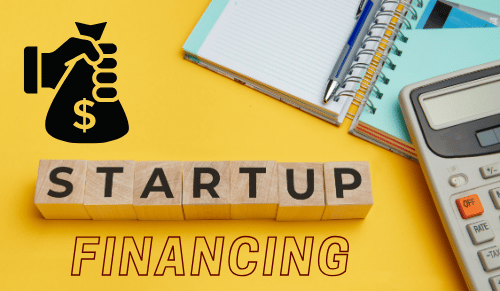
Startup Financing concept with blocks spelling 'STARTUP,' a calculator, notebook, and a hand holding a bag of money.
Small Business Guide

Startup Financing: Discover Top Power Options

Starting a business is a dream many entrepreneurs have, but turning that dream into reality often requires significant financial resources.  Empower yourself by understanding the various startup financing options available, which can be the key to launching a successful startup.  This guide will cover everything from preparing to finance your new business to exploring different types of funding, including loans and investments from friends and family. 1. Introduction to Startup Financing   Financing a startup can be challenging, but it is achievable with the right strategy and knowledge.  Entrepreneurs must evaluate their needs, explore different funding options, and develop a robust financial plan.  This article provides a detailed overview of financing options available in 2024, helping entrepreneurs navigate the complex landscape of startup funding.  Successful financing begins with a thorough assessment of the startup’s capital requirements and a clear understanding of short-term and long-term financial goals.  By staying informed about the latest startup financing trends and best practices, entrepreneurs can make informed decisions that pave the way for their startup’s growth and sustainability in 2024 and beyond. 2. How to Finance a Startup Business Financing a startup involves securing capital to cover initial costs, such as product development, marketing, and operational expenses.  Entrepreneurs can choose from various startup financing options, including personal savings, loans, and equity investments.  Each option has its benefits and drawbacks.  Understanding the best funding options for startups is crucial for business development and sustainability.  Business owners should evaluate financing options for startup businesses to determine the best way to finance a startup business.  By assessing startup financing requirements, entrepreneurs can select the most suitable startup financing options and ensure their business startup is well-funded. Personal Savings and Bootstrapping Many entrepreneurs start by using their savings, a method known as bootstrapping.  This approach allows founders to maintain complete control of their business but can be risky if it fails.  Business owners must have a clear budget and financial plan to manage personal funds effectively.  Among the various finance options for startups, bootstrapping is a common choice, particularly for those seeking to avoid debt or equity dilution.  However, exploring all startup funding options is essential when considering financing new business startups.  Effective business development requires evaluating multiple startup financing options and startup funding options.  By understanding the startup funding for new businesses and the financing options available for startups, entrepreneurs can make informed decisions and reduce financial risk. Business Loans Business loans are a standard startup financing option.  These business loans typically require a solid business plan, good credit, and sometimes collateral.  For business owners, securing a loan can provide the necessary capital for business development, covering expenses such as inventory, equipment, and operational costs.  Small business loans are essential for entrepreneurs to establish or expand their ventures.  By meeting the lending criteria and presenting a robust business plan, entrepreneurs can access the financial resources needed to drive growth and ensure the long-term success of their startups. 3. How to Prepare to Finance a New Business Understanding the financial needs of a new business is the cornerstone of the financing process.  Entrepreneurs must prepare the necessary documentation.  This involves developing a comprehensive business plan, showcasing clear financial projections, and demonstrating how the funding will contribute to business development and long-term success. Developing a Business Plan A comprehensive business plan is crucial when figuring out how to finance a startup business.  It details the business model, market analysis, financial projections, and funding requirements.  This essential document is vital for convincing lenders and investors of the viability and potential success of the business.  The business plan should clearly articulate the company’s vision, goals, and strategies to determine the best way to finance a startup business.  This involves an analysis of the target market, competitive landscape, and detailed financial forecasts that demonstrate the expected profitability and cash flow.  By presenting a well-thought-out business plan, entrepreneurs can effectively answer questions like, “How do I get financing to start a business?” and “Can I get funding to start a business?” Building Creditworthiness Having a good credit score is not just important; it’s vital for securing loans, especially when considering how to finance a small business startup.  Entrepreneurs should diligently manage both personal and business credit by paying bills on time and minimizing debt.  Establishing a separate business credit profile can also be beneficial, as it distinguishes the business’s financial health from personal finances.  To address queries such as, ‘Can I get a loan to start my business?’ and ‘How to finance a startup business?’, it is essential to demonstrate creditworthiness to potential lenders.  This involves maintaining a history of responsible credit use, avoiding late payments, and keeping debt levels manageable.  Additionally, regular monitoring of credit reports and correcting any inaccuracies can help maintain a strong credit score, further enhancing the chances of obtaining financing for business development and growth. 4. Best Startup Business Loans in 2024 The landscape of business loans is continually evolving, with new products and lenders entering the market regularly.  Entrepreneurs have a variety of options to consider, each with its own set of advantages and challenges.  Here are some of the best startup business loans available in 2024, tailored to meet the diverse needs of new businesses seeking financial support: Traditional Bank Loans Traditional bank loans are known for offering competitive interest rates and favorable terms.  However, they can be challenging to obtain for startups due to stringent requirements such as high credit scores and substantial collateral.  Entrepreneurs with strong credit and a solid business plan may find this option viable, as banks prefer to lend to people who can show that they are financially stable and have a clear strategy to become profitable.  While the application process can be lengthy and demanding, the potential benefits of lower interest rates and flexible repayment terms make traditional bank loans an attractive option for many small business owners. SBA Loans The U.S. Small Business Administration (SBA) has an array of specialized loan programs tailored to meet the unique needs of

Scroll to Top