
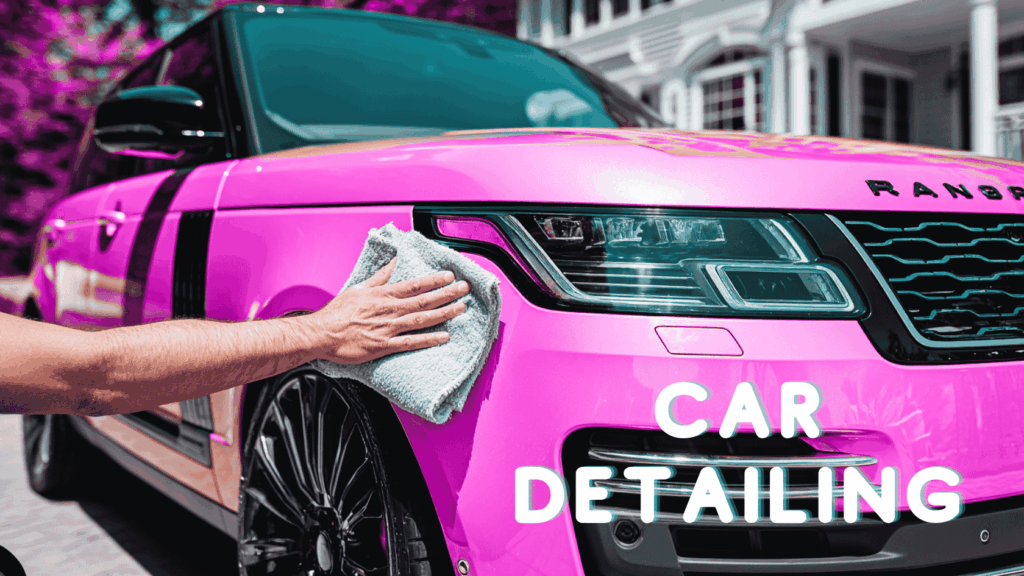
Mobile Car Detailing Service: Boost Profits
In the fast-growing detailing industry, mobile car detailing services continues to thrive due to its convenience, customization, and accessibility. Whether you’re searching for “mobile car detailing near me cheap” or exploring the benefits of an “eco-friendly mobile car wash,” it is essential to evaluate service quality and operational efficiency using reliable statistical tools. In this blog, we apply concepts such as variable types, levels of measurement, and quantitative analysis to understand and improve customer experience and business performance in mobile detailing businesses. The rise of mobile detailing services reflects a broader shift in how car owners value convenience and cleanliness, especially when it comes to on-demand services for luxury cars and everyday vehicles alike. As detailing companies grow and the detailing has become increasingly sophisticated, so do their data needs. Understanding Variables in Mobile Detailing Analytics Types of Variables To effectively analyze trends in mobile car detailing services, we must first understand the types of variables in statistics. Data collected through customer feedback or service operations can be classified as either: Qualitative Variables: Brand of detailing service, vehicle make, customer satisfaction category (e.g., “excellent,” “fair,” “poor”) Quantitative Variables: Number of vehicles serviced per day, duration of a detailing job in minutes, or customer ratings on a 1–10 scale The distinction between qualitative vs quantitative variables is often shown in a simple chart that categorizes data into actionable insights for managers. With increasing advancements in detailing tools, these classifications become even more vital. Discrete and Continuous Variables in Mobile Detailing Detailing businesses produce both discrete and continuous variables: Discrete Variables: Number of appointments per day, number of technicians per team Continuous Variables: Total time spent on a detailing job, gallons of water used during an eco-friendly wash Understanding these differences allows professional mobile car detailing services to better schedule resources, manage inventory, and optimize service delivery. Whether it’s regular detailing, traditional detailing, or premium services, knowing the variable types ensures smarter business decisions. This insight is essential for managing operational costs, increasing profit margins, and offering services that save them time. Applying Levels of Measurement In analyzing mobile car detailing survey results average customer satisfaction, it is necessary to use the four statistical levels of measurement: Nominal: Types of detailing services (basic, deluxe, ceramic coating) Ordinal: Satisfaction levels (very dissatisfied to very satisfied) Interval: Temperature settings on detailing equipment (measured in degrees but lacking a true zero) Ratio: Time per service, cost per job—both with true zero points These levels help assess trends in car detailing service market size, which has grown along with the global car detailing service market and overall car detailing market. Case Study: Mobile Detailing for Pet Hair Removal Evaluating Performance Among the most common and labor-intensive requests in the detailing business is mobile detailing for pet hair removal. This service requires specialized tools, techniques, and added attention to detail. Evaluating its efficiency means examining multiple data points: Service time per job (continuous, ratio) using different tools and methods Satisfaction rating provided by customers (ordinal scale) Presence or absence of pet odor pre- and post-service (nominal) Frequency of service rebooking by pet owners (discrete) Average job cost and upsell rate for bundled services like paint protection or odor elimination (ratio) Quantitative analysis of mobile auto detailing service times for pet hair removal reveals how operational output correlates with tool efficiency and technician experience. For example, advanced vacuum systems or specialized brushes may reduce labor time by 25% while increasing satisfaction scores. Paint protection is often a premium add-on following pet hair removal, especially for luxury car owners who demand both aesthetic excellence and lasting protection. Detailed performance metrics from this case study can be used to train staff, optimize equipment investment, and create compelling marketing campaigns focused on pet-friendly households. Customer Satisfaction Surveys in Detail Designing Surveys That Work To remain competitive, mobile detailing businesses collect data from mobile car detailing survey results: “Rate your satisfaction” (ordinal) “Would you reuse this service?” (nominal) “What service tier did you select?” (nominal/ordinal) This data enables smarter decisions and service refinement. Comparisons to splash car wash or autobell car wash help assess competitive pricing. Mobile detailing apps are now vital tools for managing this feedback loop. Spotlight: Best Ceramic Coating Mobile Services Why Data-Driven Upsells Work Top best ceramic coating mobile service providers use: Interval data (temperature for curing) Ratio data (coating durability, return rates) Nominal data (product brand used) This enables professional car detailing providers to market value and durability effectively. Customers are more inclined to pay more when results are proven with stats. Market Trends in Mobile Detailing The global car detailing service market is booming as mobile detailing has become the standard for convenience and sustainability. Traditional detailing is giving way to on-demand, app-based experiences. What’s Driving Growth? Increasing sales of passenger cars Growing awareness of vehicle maintenance Expansion of mobile car detailing services across metro regions High ROI and competitive pricing Continued industry growth trajectory into 2024 and is expected to surge further Understanding the car detailing service market size helps detailing companies segment and scale. Conclusion: Driving Smart Decisions with Data Integrating statistics with mobile detailing services allows companies to: Enhance operational efficiency Pinpoint and fill service gaps Build better packages based on customer feedback Use data to validate marketing claims As service providers continue innovating, those who master data will dominate the mobile car detailing services space. The future of mobile detailing is not just clean—it’s calculated.